THE DISTRIBUTION BULLETIN ISSUE #54
By Peter Broderick

Welcome back to Section 2 of our Dynamic Distribution crash course. In this section we explain Pre-Distribution and discuss tactics. (Here is a link to Section 1), which is where to start if you have not read it yet.)
- Peter Broderick and Keith Ochwat
==============================================================
DYNAMIC DISTRIBUTION #2
THE TACTICS
Pre-Distribution is an essential part of a Dynamic Distribution strategy. Keith Ochwat of Show&Tell and I created the term to highlight the critical first stage of the strategy.
Pre-Distribution should begin before or during Pre-Production. In the Old World of Passive Distribution, Distribution didn’t begin until after Production and Post Production. In the New World of Dynamic Distribution, Pre-Distribution begins before Production and continues through Post Production.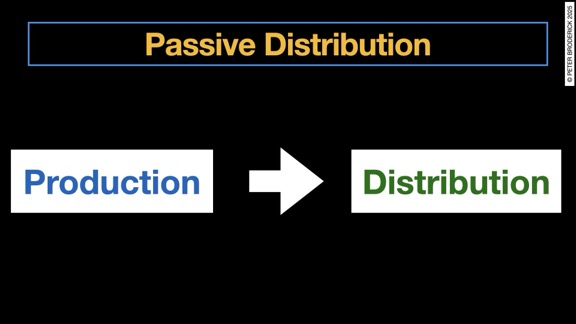
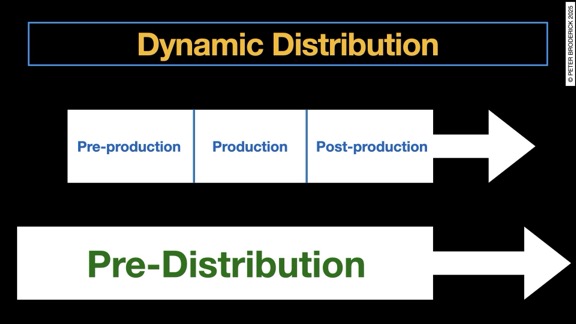
The sooner you start Pre-Distribution, the more time you will have to achieve its major goals. When you dream up your new film in the shower one morning, you should begin thinking of core audiences and potential partners.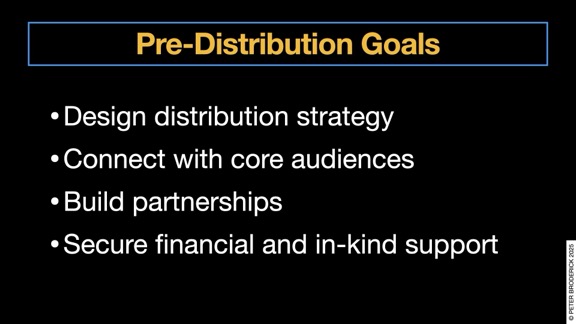
Pre-Distribution provides the time you need to achieve these important goals. You should have at least a year or more for Pre-Distribution, which continues through Pre-Production, Production, and Post. This will provide the luxury of time to explore core audiences, reach out to potential partners, pursue funding, and design and refine your distribution strategy. Without Pre-Distribution, you won’t have enough time to fully accomplish these goals and won’t be able to maximize your distribution.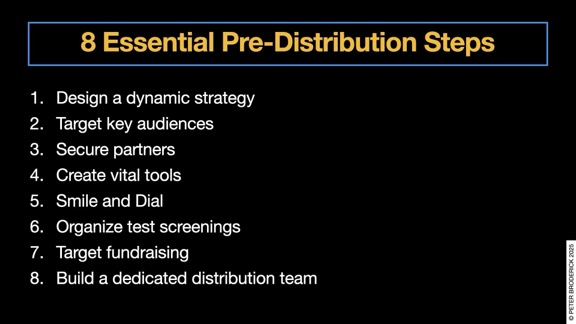
Here are the 8 essential Pre-Distribution steps:
DESIGN A DYNAMIC STRATEGY - During Pre-Distribution, it's essential to design a strategy to maximize your film’s distribution. Your strategy must be customized to your goals, your content, and your audiences.
It needs to be flexible so it can be refined as you move through Pre-Distribution and Distribution. When you are creating it, focus on the latest opportunities in the New World of Distribution rather than looking backwards at broken Old World models.
A state-of-the-art strategy will empower you to retain overall control of your distribution.
TARGET KEY AUDIENCES - Determine which audiences will be most interested in the content of your film. Create an audience hit list so you can prioritize and test audiences. Seemingly obvious audiences may not be interested but others unexpectedly may be. Begin your distribution by focusing on core audiences rather than the general public. If you succeed with these audiences, they may create a base to build on to reach a wider public.
SECURE PARTNERS - Create a hit list of potential partners. Many organizations interested in partnering may only be able to provide in-kind support. By letting their members or network know about your film, they can create significant awareness, which turns into great word-of-mouth within the organization and the core audience. Other partners may be able to provide both financial and in-kind support.
The key to finding great partners is to give them a sense that being involved with your film will benefit their organization by helping them:
- educate or inspire their members
- attract new members or supporters
- make money by screening your film as a fundraiser
- build public support for an urgent goal
CREATE VITAL TOOLS - When you begin Pre-Distribution, you must create a website and a pitch deck. The initial website can be simple and the pitch deck should be no longer than 2 pages. You need both when you start approaching potential partners and exploring core audiences. The third vital tool is a teaser or trailer. This will take longer to create and will be invaluable.
SMILE AND DIAL - Use a "smiler and dialer" to fast forward your efforts to connect with potential partners and core audiences. Your "smiler and dialer" will research possible partners, create a hit list, and do the initial outreach to organizations. She will facilitate your key partnerships. Her conversations with potential partners will also help you explore and target core audiences.
ORGANIZE TEST SCREENINGS - Once production is underway you will be able to do test screenings. You can arrange work-in-progress screenings of scenes before you have a rough cut. The Forks Over Knives team did more than 20 test screenings of cuts as they were editing the film. They showed it to groups of 20 or more, discussed it with them afterwards, made changes, and then showed it to another group. Their test screenings were essential to refining their cut. The result was a film that was irresistible to its core audience for many years to come.
TARGET FUNDRAISING - Pre-Distribution will enable filmmakers to target their fundraising for production and distribution more precisely and effectively. The more they learn from engaging with their core audiences, the easier it will be to find potential partners. These partners can help filmmakers identify potential funders. The connections filmmakers have made with core audiences will help persuade funders that their films will have real impact.
BUILD A DEDICATED DISTRIBUTION TEAM with the mix of talents and experience needed to execute your strategy. Some roles may be part time or short term. A one-man band or one-woman band won’t work.
Here are the 8 Stages of Dynamic Distribution:
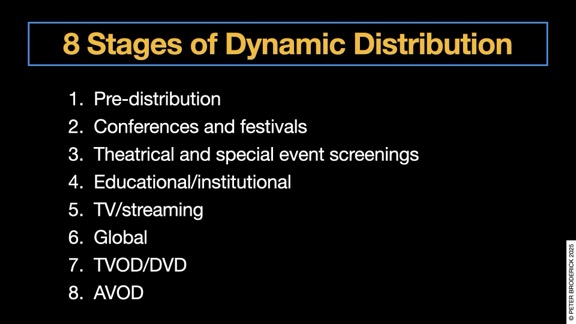
Next we will focus on Dynamic Distribution success stories.
==============================================================
Keith and I will follow up shortly with Sections 3 and 4 of our Dynamic Distribution crash course. They will provide concise case studies of 8 films that have broken through using Dynamic Distribution. Understanding their different strategies and reviewing the takeaways from their successes will be invaluable as you design your own Dynamic Distribution strategy.
Here is a link to Section 1.
© 2025 Peter Broderick